Research Article | | Peer-Reviewed

Air and Missile Defense in the High North: Strategic Importance, Technological Advancements, and Security Challenges

Received: 12 June 2025     Accepted: 5 July 2025     Published: 30 January 2026
Views:       Downloads:
Abstract

This study discusses the evolving features of air and missile defense in the High North, highlighting the strategic significance of the region, new technologies, and new security threats. Climate change is profoundly reshaping Arctic security dynamics by accelerating ice melting, opening new sea routes, and expanding access to untapped natural resources-factors that are escalating geopolitical competition in the region. In turn, defense pacts and global cooperation, such as North American Aerospace Defense Command and North Atlantic Treaty Organization, have increasingly become part of the equation in forging a unified and strong Arctic defense policy. These cooperative arrangements are paramount in the solution of shared security issues and in ensuring a common deterrent position. Next-generation radar technologies, hypersonic interceptors, and autonomous surveillance systems are constructing defenses against advanced threats such as hypersonic missiles, drone swarms, and cruise missiles. However, extreme environmental conditions of High North, inadequacies of infrastructure in it, and dynamic environments of modern warfare also continue to pose substantive operational and strategic challenges. This study shows the need for adaptive responses, ongoing innovation, and greater global collaboration to effectively realize the strategic interests of the Arctic.

Published in Science Futures (Volume 2, Issue 2)
DOI 10.11648/j.scif.20260202.15
Page(s) 140-157
Creative Commons

This is an Open Access article, distributed under the terms of the Creative Commons Attribution 4.0 International License (http://creativecommons.org/licenses/by/4.0/), which permits unrestricted use, distribution and reproduction in any medium or format, provided the original work is properly cited.

Copyright

Copyright © The Author(s), 2026. Published by Science Publishing Group

Keywords

High North, Air Defense, Missile Defense, Arctic Security, Geopolitical Significance, Technological Advancements, Regional Stability

1. Introduction
The High North which encompasses the Arctic and sub-Arctic regions has emerged from a periphery security concern to an internal battleground of global geopolitics and warfare strategy. Once well-protected by its harsh climate and geographical remoteness, the region is now more accessible due to accelerated ice melt under the compulsion of climate change . This alteration has revealed new sea routes such as the Northern Sea Route and Northwest Passage and exposed vast reserves of unexplored hydrocarbons and minerals-increasing competition between non-Arctic and Arctic nations . Under this transformation, the strategic importance of air and missile defense has come to assume unprecedented importance. The Arctic is now a geographic axis for intercontinental ballistic missile trajectories and early warning observation, particularly between Russia and North Atlantic Treaty Organization states, reconfiguring international military posturing and deterrence logic .
Technological advancements have been at the forefront of the military evolution within the High North. The rollout of next-generation air and missile defenses-such as Russia's S-400 and S-500 systems and North Atlantic Treaty Organization's networked radar and Terminal High Altitude Area Defense systems-is a sign of intensifying regional arms races . Missile defense radars have themselves been upgraded in the United States in Alaska and Greenland, and Canada has explored North American Aerospace Defense Command modernization to include next-generation threat detection . At the same time, China, in spite of its geographical distance, has reaffirmed itself as a "near-Arctic state" and is investing in double-purpose Arctic technology, such as satellite reconnaissance and AI-assisted surveillance . All these new developments emphasize a very important turning point: The Arctic is no longer an environmental frontier-but a hub of global security competition facilitated by cutting-edge technologies.
The militarization of Arctic air space, however, poses serious regional stability issues as well as international cooperation challenges. The harsh operating environment-severe cold, sparse satellite coverage, and poor infrastructure-does not make it easy to deploy and sustain advanced defense systems . Furthermore, growing dual-use military infrastructure undermines the normative foundation of Arctic exceptionalism in which amicable scientific collaboration previously was the prevailing ethos. Scholars such as think the securitization of the region carries a probability of inducing a security dilemma, where defensive measures of one state misinterpreted as offensive by the other-especially in the absence of specialized Arctic arms control agreements.
Against these facts, the necessity of assessing air and missile defense for the High North is both urgent and complex. This chapter analyzes strategic drivers of military build-ups, reviews the latest technological developments in missile defense and radar vigilance, and raises the question about the impact on regional and global security. It also explores how Arctic governance institutions, such as the Arctic Council, have lagged behind trends of militarization and how future multilateral and bilateral agreements could ease tensions. Ultimately, understanding the interplay between deterrence, diplomacy, and defense in the High North will be crucial to deciding the future of the region as a region of conflict or cooperation .
2. Background
During the Cold War, the Arctic was a central arena in the nuclear rivalry between the Soviet Union and the United States. Due to its proximity to the polar flight paths of strategic bombers and intercontinental ballistic missiles, it was essential for early warning systems. The United States and Canada constructed the Distant Early Warning Line across Alaska, Canada, and Greenland to intercept Soviet bombers, complemented by the Ballistic Missile Early Warning System . The Soviet Union, in turn, militarized the Kola Peninsula with nuclear submarines and missile defense systems to protect its northern border . The Arctic subsequently became a region of high-level deterrence and technology-based innovation, a reflection of bipolar rivalry.
The collapse of the Soviet Union provided a temporary decline in militaristic posturing within the Arctic. The creation of the Arctic Council marked a transition toward environmental co-operation and multi-lateral regulation . The Council's early focus on climate change, sustainable development, and Indigenous rights was a new age of peaceful cooperation . The Ilulissat Declaration reaffirmed the commitment of Arctic states to resolve disputes within the United Nations Convention on the Law of the Sea framework, avoiding militarization and unilateral assertions . During this period, the Arctic was a symbol of "exceptionalism" in global politics-where science and diplomacy prevailed over security competition.
Climate change has rapidly revolutionized the geopolitics of the Arctic. With increased warming of over four times the global pace , thawing sea ice has revealed new shipping lanes like the Northern Sea Route and immense hydrocarbon riches yet untapped. Russia's ceremonial flag planting on the seabed of the North Pole revived nationalist claims to Arctic territory . The United States Geological Survey estimated in the Arctic to hold approximately 13% of the world's unknown oil and 30% of unknown natural gas . Consequently, Arctic and non-Arctic nations began to modify military doctrines and infrastructure to protect new strategic interests .
The rising geopolitical significance of the Arctic has attracted local and global actors. Russia invested massively in modernizing its Arctic military bases, deploying advanced S-400 and S-500 anti-air defense systems, reactivating Cold War-era facilities, and enhancing its nuclear submarine force . America responded with new Arctic and North American Aerospace Defense Command modernization strategies, while North Atlantic Treaty Organization allies organized combined Arctic exercises. This is in response to China's self-declared "near-Arctic state" status that enables its aspiration with dual-use investments such as the Xuelong icebreaker initiative and Arctic satellite stations . This reveals the rise of dual-use technologies and hybrid threats in the region, where the boundaries between scientific, economic, and military spheres overlap.
As military interests expand, governance of the Arctic has a complex future ahead. While the Arctic Council remains the foremost intergovernmental forum for peaceful cooperation, Russia's assault on Ukraine during fractured its consensus-based regime, and multiple members have suspended formal meetings . Scholars nowadays challenge the adequacy of existing legal tools like United Nations Convention on the Law of the Sea to manage competing claims to resources and to assure freedom of navigation. Appeals for new confidence-building actions in the Arctic-like mutual surveillance systems, crisis hotlines, and transparency over weapons-have emerged as ways to forestall escalation . Ultimately, the future of Arctic security is to reconcile sovereign military postures with inclusive, rule-of-law multilateral interaction .
3. Theoretical Background
Realism, a dominating paradigm in international relations, argues that states are power- and survival-driven in the anarchic international community and will use military power to promote national interests . The model is highly applicable to the Arctic, where nations such as Russia, the United States, Canada, and North Atlantic Treaty Organization allies are becoming more interested in developing their Arctic defense stance. Russia's mass positioning of missile-carrying submarines and advanced air-defense installations in the Kola Peninsula embodies a truepolitik pursuit of regional dominance. According to an E‑International Relations case study, Moscow has emerged as a regional hegemon, prompting the United States and Arctic allies to pursue internal and external balancing-building radar facilities, enhancing North American Aerospace Defense Command, and mobilizing military drills in Alaska and northern Europe. Realism critics dispute whether traditional balancing may be applied in Arctic circumstances, since it is of its own specific environmental and geopolitical constraints (turn0search2). Realism does offer a clear-cut lens through which to observe the role played by Great Power rivalry and security threats to drive Arctic military modernization and militarization .
Technological Determinism maintains that technological innovation drives strategic action and societal transformation more than ideational forces . In the High North, the theory explains the military renaissance: technical progress in radar systems, satellite observation systems, missile interceptors, and Aegis-class systems form the basis of Arctic deterrence infrastructures . Upcoming integration of artificial intelligence and machine learning into weapons systems-enabling quicker detection, tracking, and autonomous response-demonstrates how technology is reshaping command and control in extreme polar environments . This aligns with global trends for regions like the South China Sea, where technological superiority undergirds strategic leadership . Critics signal an impending weakness through automated bias or heightened security threats, fueling an "arms‑race instability" in far-off, unfriendly theaters . Thus, technological determinism highlights these means through which innovation enables but also complicates strategic governance in the Arctic.
Realist and technological determinist synthesis unveils new trends in Arctic security scholarship. Realists highlight the way even with cooperation norms (e.g., in the Arctic Council or Ilulissat Declaration), states remain self-seeking actors pursuing strategic advantage. This strain is a compound security dilemma: Arctic nations cooperate on environmental and search‑and‑rescue issues clandestinely while strengthening military resources . Meanwhile, technological determinists observe how speeding up defense innovation-most notably Artificial Intelligence, self‑driving cars, and surveillance networks-changes strategic thresholds, decision horizons, and deterrence stances . In parallel, these lenses make sense of a more nuanced vision in which polar military modernization is not merely a responsive process but an affirmative dynamic of strategic intent, technological advancement, and geopolitical signaling. This dual-framework approach advances the literature by explaining why Arctic militarization continues apace in the face of official cooperation and by showing the urgent necessity for adaptive governance systems commensurate with technologically advanced, strategically contested spaces.
4. Problem Statement
The High North, specifically the Arctic, has become a point of worry in global security due to its strategic significance, environmental changes, and evolving technological patterns. Expanding accessibility due to melting ice caps have amplified geopolitical competition among the Arctic states and non-Arctic parties, and posed urgent questions for air defense and missile defense. This problem is compounded by the region's harsh climate and weak infrastructure, which present unique challenges for the installation and maintenance of advanced defense systems. For instance, Russia has remarkably boosted its military presence and capability in the Arctic, including the installation of advanced missile systems and military hardware modified for the Arctic environment . This expansion is part of the greater trend of nations building up their military capacity as a reaction to shifting geopolitical configurations and the strategic value of Arctic resources and shipping routes .
The High North is confronting rapidly evolving technological advances in air and missile defense technologies that hold the promise as well as the challenge. Technologies such as integrated radar systems and hypersonic missiles, promise enhanced defensive capabilities but accompany themselves with issues related to system integration, interoperation, and response time. The United States and its allies, for example, are investing in the development of next-generation air and missile defense capabilities to address future attacks from state and non-state actors . However, these advances must be adapted to the Arctic unique operating conditions, such as extreme cold, large distances, and limited logistical support. These issues need to be resolved in order to advance the efficiency of defense policies within the High North and secure regional stability amidst rising strategic competition .
5. Methodology
This study employed explanatory research design and qualitative data analysis method. Case studies of defense policies of the countries in the Arctic region and analysis of policy documents were qualitative methods applied. The study applied content analysis of data analysis involving an assessment of defense capacity, scenarios for threats, and technological advancements. This extensive method made it possible to gain a comprehensive insight into the defense scenario in the High North.
6. Literature Review
New scholarly literature more and more recognizes the transformation of the Arctic from a remote periphery into a geostrategic fulcrum defined by climate change, shifting geopolitics, and contested regimes of governance. all center on the thesis that retreating ice has expanded new sea lanes and energy borders, and therefore increased strategic rivalry and reordered global power politics in the High North. Russia's war-faring of the Northern Sea Route under the auspices of the world's largest icebreaker fleet and its Northern Joint Strategic Command is perceived by and others as a strategic counter force to North Atlantic Treaty Organization's activities in the Arctic. This has incurred a securitized reaction by the United States, Canada, and Nordic allies through heightened surveillance mechanisms, interoperability exercises like Trident Juncture and Operation Nanook, and increased investment in defense systems capable of operating in the Arctic region . However, critical analyst such as warn that this military expansion would overshadow the Arctic as a region of peace and environmental custodianship, paralleling wider discussions on the dangers of securitizing climate-change-induced changes. Meanwhile, legal scholars have faulted current governing institutions-most notably the United Nations Convention on the Law of the Sea-as lacking in their ability to deal with rival claims by Arctic coastal states to the continental shelf and for failing to adequately consider new security, commercial, and environmental realities . China's self-definition as a "near-Arctic state" has also contested the order of the region, with alarm over norm dilution and overreach of institutions . Suggestions for a comprehensive Arctic Treaty, along the lines of the Antarctic Treaty System, are gaining academic traction , though are met with resistance from Arctic states keen to maintain their sovereign prerogatives and resource entitlements. As this occurs, meanwhile, there is growing tension within the literature between extraction imperatives for resources and environmental protection. Authors like note the paradox of gaining access to Arctic fossil fuels in a region disproportionately affected by climate change. Scientific diplomacy, encapsulated in the Arctic Science Ministerial and the International Arctic Science Committee, is emerging as a key mechanism for advancing environmental cooperation and knowledge-exchange . But scholars caution that without stronger institutional linkages between science and policy-making, such efforts could be overshadowed by national security concerns and economic determinants. And collectively, these discourses unveil the Arctic as a developing arena wherein geopolitics, regimes of law, environmental ethics, and science diplomacy cross-cut-calling for advanced, integrated answers to regional governance.
The missile defense and militarization of the Arctic have emerged as central themes in contemporary strategic and security discourse, a reflection of increased entanglement of technological innovation, sovereignty claims, and climatic-driven geopolitical transformation. Researchers such as place the Arctic not only as a resource-rich periphery but as a vital space in which great power competition is increasingly defined by complex military deployments and strategic deterrence postures. The United States Ground-based Midcourse Defense system in Alaska, supported by next-generation systems like the Long-Range Discrimination Radar, is an indicator of a bigger American plan to protect the country from intercontinental ballistic missile threats, particularly from rogue states and emerging peer competitors . But arguments by , subsequently built upon by , question the operational viability, economic sense, and functional overextension of utilizing such advanced infrastructure within hostile Arctic conditions, showing the tension between innovation and operational sensibility. Meanwhile, Russia's extensive missile defense infrastructure-focusing on its Kola Peninsula-centered S-400 and upcoming S-500 systems and beyond-has generated significant debate regarding regional balance of power. Experts like argue that Moscow's military approach to the Arctic is intended to make its northern stronghold while improving A2/AD capacities, which would be able to threaten the northern wing of North Atlantic Treaty Organization and revive Cold War-era posturing in a previously low-tension zone. Critics like note that such capabilities would destabilize well-established Arctic norms of peaceful coexistence and create an arms race in an already environmentally vulnerable region. However, other arguments, most notably those of , note Russia's missile technological innovations-most notably in areas of hypersonic and anti-missile technology-as contributing to the global defense innovation equation. These debates stretch international security literature by entwining deterrence theory, arms control controversy, and ecological geopolitics, multiplying earlier paradigms of strategic stability and repeating the call for defense governance mechanisms specifically sensitized to the Arctic. The emerging scholarship thus necessitates a renewed consideration of established security paradigms in the perspective of the Arctic's unique geopolitical and climatic imperatives.
North Atlantic Treaty Organization's multilateral reaction to Arctic missile and air defense has created a rising intellectual discussion at the crossing of alliance politics, technological transformation, and strategic adjustment within a rapidly evolving worldwide setting. Scholars such as emphasize the manner in which Arctic security is being reconfigured by means of multilateralism that values interoperability, cooperative exercises, and collective deterrence-embodied in Canada's North American Aerospace Defense Command commitments, Norway's F-35A deployments, and multilateral exercises such as Arctic Challenge and Northern Lightning . These arrangements mirror North Atlantic Treaty Organization's evolution toward a networked, capable defense posture fitting for high-latitude geography, balancing alliance unity with national sovereignty. However, caution that the current architecture of North Atlantic Treaty Organization remains technologically short of defending against emerging threats such as hypersonic glide vehicles, stealth technologies, and cyber-attacks on early warning systems . These complaints highlighted the imperative of greater expenditure on space-based sensors, hardened command-and-control structures, and AI-supported surveillance technologies to support enhanced real-time detection and response. America's Aegis Ballistic Missile Defense, the AN/TPY-2 radar, and North Atlantic Treaty Organization's emerging ballistic missile defense are proof-of-concept stepping stones toward a multi-layered, adaptive defense system . Conversely, the arguments about destabilizing innovation, especially in relation to Artificial Intelligence, autonomous systems, and directed-energy weapons, have been subjected to relentless scrutiny by , based on whom although such technologies can enhance resilience, they undermine strategic thresholds as well as destabilize predictability in structures of deterrence. Also, writers such as raise issues regarding how North Atlantic Treaty Organization's cooperative approach must address the asymmetric threat of Russia and China's objectives in the Arctic and how militarization is undermining the long-standing assumptions of Arctic exceptionalism and requiring instantaneously governance reform. Thus, this literature contributes new insight by integrating new defense technologies with alliance action within the framework of climate-driven geopolitics change, and concentrating on the Arctic as a laboratory for future war and a crucible for multilateral security testing.
The contemporary security landscape of the Arctic is marked by the intricate cross-cutting of military modernization, cybersecurity requirements, climate-driven geostrategic change, and indigenous sovereignty, which calls for a new-generation rethink of governance and defence paradigms. Scholars such as believe that Arctic transformation into an area of heightened great power rivalry is triggered mainly by the accessibility created through climate change, re-militarization by Russia of its Arctic borderland, and the securitization of strategic infrastructure and sea routes such as the Northern Sea Route. This shift is witnessed in Russia's stationing of S-400 missile systems, expansion of its Northern Fleet, and modernization of Soviet bases . In contrast, North Atlantic Treaty Organization's approach prioritizes multilateralism, cross-domain cooperation, and layered deterrence choices such as cyber, air, and space capabilities through platforms like the United States Aegis Combat System and joint exercises . As note, the increasing digital sophistication of the defense infrastructure of the Arctic presents the need for cybersecurity as a critical imperative with network vulnerability of data, command-and-control vulnerability, and sensor node vulnerability needing encryption, intrusion detection, and AI-driven resiliency. Scholarship debate also examines cooperative structures such as United States-Japan and North Atlantic Treaty Organization-Europe missile defense alliances, mapping the intersection of technological entrepreneurship and alliance behavior in dealing with sovereignty and security . However, as caution, cooperation is fragile against the background of Sino-Russian strategic convergence in the Arctic context, necessitating more nuanced examination of hybrid threats and non-linear escalation risks. Simultaneously, the literature on climate-insecurity-drawing upon -emphasizes environmental degradation, resource extraction, and indigenous marginalization as interlinked issues. Indigenous scholars and policymakers suggest inclusive governance strategies founded on co-management and indigenous ecological knowledge, noting that institutions like the Arctic Council, while symbolically inclusive, often are not able to institutionalize indigenous agency underlines the imperative of the nexus, warning of doubling the rate of global warming, Arctic warming increases ecological vulnerability and socioeconomic dislocation. Combined, this literature enriches world scholarship by syncretically bringing geopolitics, the environment, and socio-cultural dimensions of Arctic security into a comprehensive methodology that transforms the Arctic both as a strategic competition frontier and as a crucible for cooperative, inclusive governance.
The shifting security environment of the Arctic has set off a fierce scholarly debate that touches upon military modernization, environmental degradation, geopolitical shifts, and decolonizing security discourses, reflecting increasing complexity and controversy surrounding the region. Contemporary analysts such as shows how the rapid melting of sea ice in the Arctic due to climate change is bringing into play strategic maritime transit routes and resource frontiers, prompting powers such as Russia to increase military capacity such as the Northern Fleet and S-400 air defenses. This has given rise to cyber vulnerabilities and hybrid threats specifically in the high-tech infrastructures like missile shields and satellite networks , which raise concern regarding the susceptibility of the Arctic to digital intrusion in an environment already afflicted with the lack of infrastructural resilience. Scholars such as are against the trend of militarization, in that there is a creeping Cold War attitude, while others, including , are in favor of making multilateralism stronger using the Arctic Council, although it is limited when addressing hard security issues. Legal commentators like advocate for the stabilizing role of United Nations Convention on the Law of the Sea in establishing maritime boundaries and avoiding conflict, but critics like question its effectiveness in securing compliance in the age of rising geopolitical rivalries. At the same time, scholarship from critical and Indigenous scholars, such as , is restructuring literature about Arctic governance at its very core to promote a shift towards platforms that are based on rights, inclusive, and ecological security that recognize Indigenous sovereignty and knowledge systems. Meanwhile, China's increased interest in the region through the Polar Silk Road complicates traditional norms of governance, generating concern regarding the role of non-Arctic actors in regional stability and resource management . This complex interplay of power politics, technological vulnerability, environmental vulnerability, and normative contestation-subsumed by as a "multi-order Arctic"-demands an interdisciplinary and adaptive policy architecture. Scholars call for more hybrid forms of governance that bring together legal tools, security dialogue, environmental conservation, and Indigenous participation, enhancing a vision for Arctic security going beyond state or militaristic imaginaries. This convergence of various minds not only challenges dominant hegemonic vision but also enriches new world security imagination by redefining security in an ecologically and geopolitically challenged sub region.
The evolving nature of Arctic security is increasingly seen through multidimensional and interdisciplinary lenses, particularly as the region becomes a vortex of geopolitical competition, environmental challenge, technological change, and Indigenous activism . The literature on Arctic governance-drawing on institutional foundations like the Arctic Environmental Protection Strategy and empirical assessments by -emphasizes the environmental necessity that underpins regional cooperation. Yet, writers such as have posed sharp criticisms, arguing that while soft-law instruments and consensus-based institutions such as the Arctic Council have been successful at promoting dialogue, they are institutionally constrained to deal with militarization and to enforce environmental or Indigenous-led agendas. There have been parallel arguments regarding the representational justice of Indigenous knowledge systems, as call for the substantive epistemological incorporation of Indigenous worldviews into Arctic policy-making, rather than symbolic representation. Strategic and military writing, conversely, is increasingly showing the region's transformation into a defense border. , Lajeunesse (2022), and present Arctic thaw as a cause of military realignment, with states such as Russia and America deploying next-generation missile defense systems-the S-500 and Long Range Discrimination Radar, respectively-amid the backdrop of escalating strategic rivalry . However, noted researchers such as caution that overemphasis on hard security paradigms risks undermining cooperative regimes, pushing out Indigenous agendas, and sacrificing long-term regional stability. Such militarization is also compounded by new asymmetric and non-kinetic threats, including cyber vulnerabilities and the limitations of legacy radar systems to address hypersonic and space-based threats . To this, researchers point to holistic solutions: multinational exercises , North American Aerospace Defense Command modernization , and Artificial Intelligence-driven surveillance advancements , 137, 139, 140], all reflecting a broader shift in Arctic security studies toward hybrid models that fuse defense innovation with environmental expectation. In turn, this body of literature contributes to new knowledge in that it avoids reductionist or state-centric thinking and instead conceptualizes Arctic security as a polycentric, dynamic, and climate-contingent arena requiring cross-sectoral governance, pluralistic legitimacy, and resilient technological infrastructures.
7. Discussion of Study Findings
Key Arctic developments
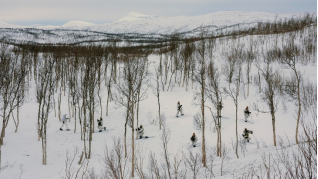
Figure 1. A warrior trying to teach the west how to fight in the Arctic.
7.1. Greenland in the Crosshairs of Arctic Geopolitics
Greenland, once a peripheral region, has found itself in the focal point of 21st-century geopolitics due to skyrocketing climate change and shifting power balances in the Arctic. Melting of Greenland's ice sheet, one of the dire consequences of global warming, has unlocked new sea routes and revealed vast untapped reserves of critical minerals such as rare earth elements and uranium . This shift has brought Greenland into the crosshairs of world powers seeking strategic location in a more dynamic region. Climate change, in this context, is not solely an environmental issue but a geopolitical driver that is reshaping Arctic priorities at their roots .
The United States has traditionally valued Greenland's strategic significance, particularly post-Cold War when it constructed the Thule Air Base as part of its early-warning system and missile defense. Washington has recently bolstered its attention on Greenland, however, with a highlight being the controversial proposal by President Donald Trump to purchase the island-a step staunchly criticized as neocolonial and diplomatically obtuse . As a response to growing Chinese and Russian interests in the Arctic, the United States opened its consulate in Nuuk in and increased diplomatic and economic engagement, including financing for infrastructure . The steps have been interpreted by the majority of researchers as part of a broader United States bid to reclaim United States leadership in the Arctic and forestall competitor powers' influence .
Geographically distant from the Arctic, China has become a "near-Arctic state" and has increasingly invested in Arctic science, infrastructure, and resource extraction. Greenland, bountiful with rare earth deposits, has attracted Chinese companies to secure access to supplies essential for technologies such as batteries, wind turbines, and electronics . Development projects such as the Kvanefjeld rare earth mine, which have been funded by Chinese firms, have been of concern to Washington and Copenhagen over strategic exposure and dual-use considerations . China's seemingly commercial agendas are accused by critics of hiding broader geopolitical ends, such as the Belt and Road Initiative, which has the tendency to obscure economic development and strategic penetration .
Russia remains the dominant Arctic power by geography and military presence. It has significantly expanded its Arctic military infrastructure, reopened old Soviet bases, and stepped-up patrols along the Northern Sea Route. Moscow views the Arctic as part of national security and economic destiny, especially in energy exports and naval projection , 154]. This militarization has prompted North Atlantic Treaty Organization to reevaluate its Arctic policy, with countries such as Denmark-Greenland's initial colonial and current constitutional authority-having spent heavily in Arctic defense technology. The rise in the deployment of North Atlantic Treaty Organization troops, including American soldiers and equipment in Greenland, marks a shift from joint management of the Arctic to one of strategic competition .
Between these great power interests lies Greenland's internal aspiration to full independence. Although it presently enjoys widespread autonomy as part of the Kingdom of Denmark, the majority of Greenlanders view an interest in the island as a way of accelerating the path to sovereignty. Calls for a new Greenland constitution and calls for a referendum on independence reflect the growing desire to control the island's political and economic fate . However, scholars warn that total independence would require a sustainable economic model, especially considering the fact that Greenland remains highly subsidized by the Danes. There is also concern about independence exposing Greenland to greater vulnerability to geopolitical manipulation by other nations .
Recent scholarly literature has contributed significantly to framing the Arctic as a geopolitical space that is evolving at high speed. Traditional perception of "Arctic exceptionalism" or the notion of the insulation of the Arctic from conflict has been challenged by increasing securitization of the region The "resource-security nexus" has also been invoked to grasp how climate change, natural resource development, and geostrategic rivalry intersect in the Arctic, positioning certain regions like Greenland at the center of strategic rivalry Governance institutions such as the Arctic Council are under strain, particularly since Russia's invasion of Ukraine in , causing perturbing cooperation and challenging the effectiveness of multilateral organizations in conflict prevention .
Greenland's new geopolitical position is the product of both environmental transformation and great power rivalry. With the Arctic becoming ever more central to global security and economic interests, Greenland sits at the intersection of climatic exposure, strategic interest, and political aspiration. While outsiders struggle for primacy, Greenland's government is navigating its way toward greater independence. The island's future will no longer be left to the geopolitical desires of Washington, Moscow, and Beijing but also to the resilience and creativity of its own people. As the literature ever more shows, the Arctic is no longer a geopolitical cul-de-sac-it is a cutting edge of 21st-century statecraft.
Source: Developed by the Author

Download: Download full-size image

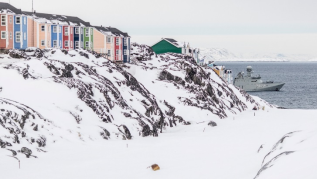
Figure 2. Greenland got caught in the clash of superpowers.
Among the most powerful trends in the Arctic is the revival of the region militarily. Russia, America, Norway, and Canada have been expanding military presence in the region. Russia has built and upgraded over 50 military bases above the Arctic Circle, including airfields and missile defense systems along the Northern Sea Route . The United States and North Atlantic Treaty Organization partners have answered with greater training, monitoring, and arms modernization in Alaska and northern Scandinavia. This is a typical security dilemma, wherein defensive measures by one are interpreted as threats by others, leading to an arms race.
The Arctic is becoming more and more a testing ground for advanced military technologies. Harsh climatic environments-cold temperatures, restricted satellite sighting, and magnetic irregularities-have necessitated investments in next-generation radar systems, unmanned drones, and Artificial Intelligence-driven early warning systems. For example, the United States has upgraded its North Warning System and is adding new Over-the-Horizon Radar to enhance missile detection and response in the High North. These advancements are manifestations of technological determinism, in which the defense policy is shaped by the capacities and requirements of emerging technologies .
The Arctic has brought about realignments of global security alliances. North Atlantic Treaty Organization has extended its presence there through the Arctic Command and increased mutual exercises such as Trident Juncture. Simultaneously, China has also declared itself a "near-Arctic state" and invested significant resources in polar science, icebreakers, and Polar Silk Road infrastructure, which triggered the attention of Western powers regarding its long-term strategic interests. The rise of non-Arctic actor engagement reflects an expanding geopolitical competition, broadening the scope of traditional adversary competition into this historically remote region
Global warming melting the sea ice is opening up the Arctic for natural resources and sea lanes. The Northern Sea Route is becoming increasingly navigable for shipping, cutting transit times between Europe and Asia by up to 40% compared to the Suez Canal . This has stimulated renewed competition for fossil fuels, rare earth minerals, and fishing grounds. In response, Arctic states are scrambling to define and claim prolonged continental shelves in accordance with the United Nations Convention on the Law of the Sea, precipitating legal and political controversies.
Although the Arctic Council ensures environmental cooperation and indigenous rights, it is not suitably positioned to regulate military matters. This institutional shortcoming hinders conflict management, regulation of new shipping routes, and coordination of security plans. The Ilulissat Declaration ensured peaceful cooperation but did not have binding features for security management. This absence of coercive standards makes it vulnerable to miscalculations and unilateral actions, particularly during increased tensions.
Due to the Arctic's close location to population centers and strategic launch corridors, nations are remodeling their deterrence strategies. The United States is modernizing its Ground-Based Midcourse Defense and increasing the role of Aegis-equipped destroyers in the Arctic region. Russia, in turn, is modernizing its S-400 and S-500 missile defense systems for use in the Arctic. These actions indicate that the region is transforming into a central frontier in global missile defense architecture, increasing the potential for arms races and escalation.
The Arctic is no longer a peripheral fringe; it has become a central node in international security, energy, and technological networks. Military expansionism, fast-paced technological change, climate-sensitive access, and governance vacuums meet to form a dynamic and evolving geopolitical stage in the High North. Regional stability in the future will depend upon the ability of Arctic and non-Arctic states to balance competition with cooperation and create governance structures that can adapt to rapidly evolving strategic conditions.
Source: Developed by the Author

Download: Download full-size image

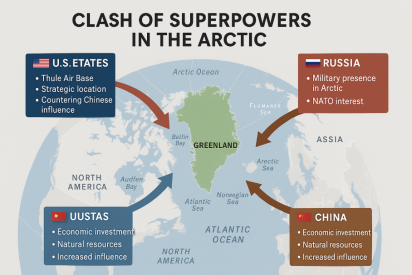
Figure 3. Clash of superpowers in the Arctic.
The "Clash of Superpowers in the Arctic" infographic graphically illustrates how Greenland is becoming a geopolitical hot spot in the Arctic due to its strategic geography and natural resource wealth. It focuses on the interests and activities of three world powers: The United States, Russia, and China.
7.2. Greenland's Strategic Significance
Right in the center of the map is Greenland, which is halfway geographically between North America and Europe and provides a very strategic military and monitoring spot in the Arctic. There are three arrows in the infographic directed at Greenland from the United States, Russia, and China-representing their growing influence and rivalry there.
7.3. United States (Blue Box – Top Left)
The United States has a substantial military presence in the Thule Air Base in northern Greenland for missile warning and space tracking. Greenland is important in terms of maintaining Arctic shipping routes under surveillance and extending control over the Arctic airspace. The United States has grown apprehensive about China's economic investments in Greenland, viewing them as threats to Western security interests .
7.4. Russia (Red Box – Top Right)
Russia has invested heavily in Arctic military capabilities, such as the Northern Sea Route development . Russia sees Greenland as part of North Atlantic Treaty Organization's northern flank and Western military presence there as a challenge to its sphere of influence. Russia's activities aim to secure its dominance of Arctic shipping and energy exploitation.
7.5. China (Orange Box – Bottom Right)
Source: Developed by the Author

Download: Download full-size image

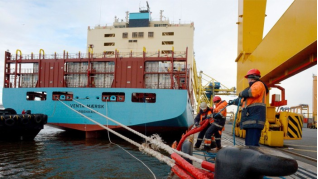
Figure 4. Shipping lanes go cool on Arctic Ocean route.
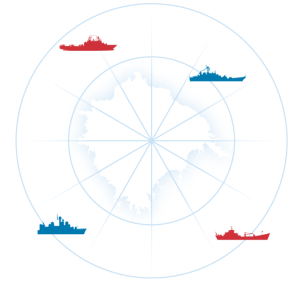
Source: Developed by the Author
China has sought to finance infrastructure projects and mining operations in Greenland, including rare earth minerals important to technology industries . China wants to include Arctic shipping lanes under its overall Belt and Road Initiative through its Polar Silk Road, which is raising alarm in Washington and Brussels. Although not an Arctic state, China has branded itself a "Near-Arctic Power," seeking legitimacy and access to future trade routes and energy resources .
Source: Developed by the Author

Download: Download full-size image

Figure 5. Russia is winning the race to dominate the Arctic.
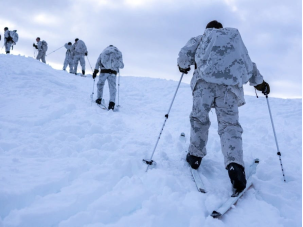
Figure 6. U. S. marines brave freezing temperatures while readying for a fight in the high Arctic.
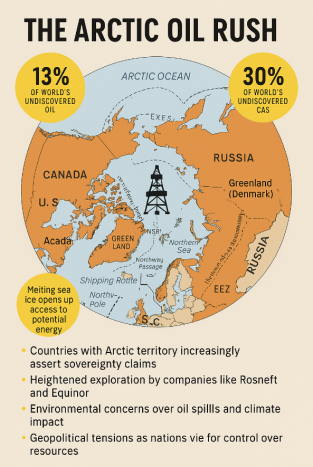
The Arctic Oil Rush is employed to refer to the increasing rivalry between the Arctic and non-Arctic states to reach and exploit the region's vast hydrocarbon riches-primarily oil and natural gas-made increasingly accessible by climate change and the melting of sea ice. The United States Geological Survey approximates] that the Arctic holds about 13% of the world's as-yet-undiscovered oil and 30% of its as-yet-undiscovered natural gas, much of which lies offshore beneath the shallow continental shelves. That huge potential has transformed the Arctic from a frozen borderland into a battleground of economic and strategic interest. These countries, such as Russia, the United States, Canada, Norway, and Denmark (via Greenland), are racing quickly to stake out Arctic territory and Exclusive Economic Zones. Russia heads the efforts at developing Arctic oil with its state-run energy giant Rosneft, which has been undertaking massive exploration in the Kara and Barents Seas. Paralleling this, Norway's Statoil (renamed as Equinor) has taken the lead in Arctic drilling in the Barents Sea, while in the United States, debate on drilling in parts of the Alaskan Arctic National Wildlife Refuge has been reopened, causing massive environmental and indigenous protest
Source: Developed by the Author

Download: Download full-size image

Figure 7. The Arctic Oil Rush: An Environmental and Strategic Flashpoint.

The Arctic Oil Rush is also drawing in non-Arctic nations such as China, who regard themselves as a "near-Arctic state" and have invested in energy relations and infrastructure such as Russia's Yamal Liquefied Natural Gas project . The participation of Beijing demonstrates the global importance of Arctic energy and the chances for a new geopolitical alignment driven by access to resources. However, this race for resources has fueled profound environmental and ethical concerns. The Arctic is one of the most environmentally fragile regions on the planet, and the exploration of oil is heightening threats of oil spills, habitat destruction, and irreparable harm to marine biodiversity. Critics argue that drilling in the Arctic undermines the global climate goals set forth in the Paris Agreement, especially its climate regulatory function worldwide . In addition, pursuit of Arctic oil has become intertwined with militarization and sovereignty disputes as nations seek to protect their energy installations and project influence in the region. Russia, for instance, has reopened Cold War-era bases and created an elite Arctic brigade, suggesting readiness to protect its energy interests . As a whole, the Arctic Oil Rush is not an extraction story; it is a technological, environmental, and geopolitical saga playing out in one of the world's last frontiers. It is a battle between national aspirations and international sustainability, technological arrogance and ecological constraint, and short-term energy requirements and long-term planetary preservation.
8. Implications
The High North's emergence as a geostrategic borderland is convincing scholarship and policymaking debates about the future of air and missile defense, as world powers rethink their Arctic positions amid climate-related accessibilities, new oceanic routes, and contested sovereignty. Melting polar ice-uncovering pathways such as the Northern Sea Route and the Northwest Passage-has redefined the Arctic as a potential chokepoint both as an economic route and as a potential catalyst to conflict, prompting greater militarization and infrastructure spending by Arctic and near-Arctic nations (Lajeunesse, 2022; . Academics such as point out that the states are responding by including next-generation missile defense and air capabilities, including space-based sensors, drones, and hypersonic missile intercept technologies, as tools of deterrence, power projection, and early threat detection. Such strategic realignment is particularly evident in United States and Russian investments in technologies like the Long-Range Discrimination Radar and S-500, respectively . However, university critiques-most notably by -urge that securitizing the Arctic could mean sidelining cooperative governance arrangements critical to the region, sidelining Indigenous stakeholders, and exacerbating tensions in a region that is historically characterized by low-level diplomas. The scholarship is more aligned with integrative security paradigms that balance hard defense necessities with environmental conservation and Indigenous knowledge systems . These analyses demand pluralist approaches that emphasize multilateralism, scientific diplomacy, and hybrid civil-military constructs, as indicated by recent North Atlantic Treaty Organization Arctic exercises and North American Aerospace Defense Command modernization initiatives . New scholarship offers fresh perspectives on the polycentric character of Arctic defence planning and its strategic implications for global strategic stability by considering the region not only as a militarised borderland but also as an interactive space influenced by resource geopolitics, climate processes, and indigenous epistemologies.
Technological innovation is reshaping Arctic missile defense and air, with consideration for the region's exceptional challenges of remoteness, huge geography, and cold climate conditions. Sophisticated systems such as the Long-Range Discrimination Radar and next-generation space-based infrared sensors are central to early warning threats, allowing long-range detection of hypersonic, ballistic, and cruise missile threats through the vast and sparsely populated areas of the Arctic . These developments are one aspect of a broader trend toward integrated air and missile defense solutions, which bring together Aegis Ballistic Missile Defense, Terminal High Altitude Area Defense, and AI-driven data fusion platforms designed to reduce response time and improve accuracy . Scholars such as note that these innovations are not only technological innovations but strategic necessities in the era of enhanced Arctic militarization and competitive great-power relations. But others such as warn that the uncontrolled proliferation of such cutting-edge systems can catalyze an arms race track, destabilize existing regional cooperation mechanisms, and divert from environmental and Indigenous security matters. Moreover, emphasize that the technological solutions must be amalgamated within multilateral and inclusive governance architectures that respect Indigenous sovereignty and epistemologies. The new literature therefore establishes the knowledge that sophisticated defense architectures must be joined with strategic transparency, climate resilience, and just cooperation to achieve long-term stability for the Arctic. This convergence of defense modernization, geostrategic evolution, and governance challenges defines a new frontier in the study of international security.
The Arctic security context is increasingly characterized by the intersection of traditional and non-traditional threats, primarily spurred by renewed great-power rivalry and the speeded-up pace of technology. Russia's heightened military footprint in the region-e.g., its Northern Fleet modernization, restoration of Soviet-era bases, and deployment of cutting-edge hypersonic weapons like the Avangard glide vehicle-has raised significant alarm among North Atlantic Treaty Organization allies and Arctic players . These hypersonic systems, by virtue of their evasiveness of conventional radar and interceptor technology reliant upon high speed, low altitude, and maneuverability, challenge existing missile defense architectures of the High North directly. Scholars such as argue that Russian strategic thinking is no longer regional but belongs to overall deterrence posturing against the West and therefore needs an adjustment of Arctic defense posture to counter hypersonic attack and multi-domain warfare. Aside from kinetic threats, cybersecurity vulnerabilities are a rapidly growing aspect of Arctic instability. show that the interdependent digital infrastructure underlying missile defense, surveillance, and communications is increasingly susceptible to state-backed cyberattacks with catastrophic consequences for early warning systems and command-and-control networks. Although defense planners like promote integrated cyber-physical defense systems with AI-powered threat sensing and fault-tolerant satellite connectivity, critics like caution against allowing military reactions to compromise diplomacy, Indigenous rights, or the protection of the environment. Hence, existing research suggests the acknowledgment that Arctic security has to change according to a multi-domain, multi-actor approach entailing technological resilience, strategic deterrence, and cooperative governance to effectively respond to the hybrid threat environment of the region.
Military operations and defense infrastructures of air and missile defenses in the High North call for technological, environmental, and cooperative solutions to challenges of unprecedented scale, requiring a redesign of defense, alliance form, and early-warning design. The severe cold, pervasive ice cover, and polar night impose rigid constraints on radar sensitivity, sensor calibration, and power systems, normally degrading performance precisely when threat detection is critical . Strategists and defense engineers thereupon demand bespoke "Arctic-hardened" materials, autonomous power solutions, and low-temperature electronics capable of extended operation in sub-zero conditions . Also critical is multinational defense asset integration: by coordinating surveillance platforms, data links, and interceptor networks through activities such as North Atlantic Treaty Organization's Arctic Challenge and Nordic joint operations, allied states augment shared situational awareness and share the logistical cost of hosting distant outposts . In addition, cutting-edge space-based infrared systems and polar-specific early warning radar-such as the ones developed by Lockheed Martin-are extending detection horizons beyond the horizon line, offering valuable minutes of warning against high-speed threats . Nevertheless, scholars such as explain that over-militarization and technological overreach risk annihilating existing cooperative frameworks and forcing Indigenous stakeholders to the margins. The emerging consensus among the literature thus requires an all-round strategy that integrates Arctic‑tailored innovations in technology with robust multilateral governance and culturally rooted engagement, offering new ideas on how to sustain credible deterrence and stable security infrastructures in the globe's toughest theater.
Investment in Arctic defense infrastructure has become an imperative of strategic importance for the protection of the viability and sustainability of air and missile defense operations in one of the most hostile and geopolitically fragile theatres in the world. Construction of radar arrays, command and control sites, and climatically hardened logistics nodes is not a matter of technical necessity but of geopolitical communication of persistence of intention and sovereignty . Scholars such as are of the opinion that robust infrastructure not only enhances early warning and interception but also supports force mobility and rapid deployment in response to emerging threats. Critics, however, point out that over-reliance on fixed infrastructure might decrease flexibility in the face of a rapidly changing climate and security environment . Strategic partnership-such as North American Aerospace Defense Command modernization, North Atlantic Treaty Organization exercises in the Arctic, and bilateral partnerships between the United States, Canada, Norway, and Sweden-highlight the use of defense diplomacy and multilateralism to offset Russian as well as Chinese strategic engagement in the High North . These collaborations spur interoperability, joint training, and shared networks of intelligence, but are also constrained by limitations in aligning national interests, in this case, the balance between environmental conservation and militarization . In addition, the future direction in Arctic defense is based on national policy frameworks and consistent funding streams. The United States , not including long-term defense spending with strategic foresight can slow the development of high-end platforms such as satellite-linked missile detection systems, hypersonic interceptors, and artificial intelligence-based command systems. Large defense technology firms such as emphasize technological development must occur simultaneously with geopolitical self-reflection, referencing that failure to refresh Arctic capabilities will augment the strategic gap by allowing adversaries to exploit developing vulnerabilities. Overall, the way forward for air and missile defense in the Arctic not only depends on technology advancement and infrastructure viability, but also on cooperative security governance, policy coherence, and future-oriented understanding of evolving geostrategic threats.
9. Conclusion and Recommendations
9.1. Conclusion
The evolving security environment of the High North is marked by a complex interplay of geopolitical rivalry, environmental transformation, and technological advancement. As the Arctic becomes more accessible due to climate-induced ice melting, its strategic significance is enhanced- ushering in not only new opportunities for resource exploitation and maritime transportation but also increasing competition and security concerns for both Arctic and non-Arctic states. This has generated a heated re-evaluation of air and missile defense postures in the region, where traditional deterrence frameworks now need to account for new kinds of hypersonic weapons threats, cyber threats, and climate-induced vulnerabilities. Scholarly debate emphasizes the necessity to transcend a purely militarized understanding of Arctic security into a vision that embraces environmental sustainability, Indigenous participation, and multilateral cooperation. The future of Arctic defense, therefore, lies not just in a product of the development of technological tools or strategic doctrine, but on the ability of the region to ensure stability by way of innovation, inclusiveness, and cross-border collaboration.
9.2. Recommendations
Arctic defense operations require specially designed infrastructure that can withstand the region's extreme environmental factors, including sub-zero temperatures, permafrost, and seasonal darkness. Governments and defense ministries must make a priority of constructing, updating, and developing climate-resilient radar stations, runways, communications systems, and logistical support facilities. These are investments not only in force projection and deterrence but in maintaining uninterrupted surveillance and response capabilities in remote and strategically important regions. As Arctic Sea lines of communication open up faster due to global warming, forward-operating bases and early warning outposts would be critical in protecting airspace and sea lanes. Such infrastructure needs to be designed with sustainability, interoperability, and deployment speed in mind in order to deal with both security and humanitarian tasks across the Arctic.
As security threats in the Arctic are transboundary, effective air and missile defense in the High North hinges on enhanced defense collaboration among Arctic states and their strategic partners. Deepening cooperative frameworks such as the North American Aerospace Defense Command, North Atlantic Treaty Organization's Arctic presence, and bilateral frameworks such as the United States-Canada Joint Command can enhance early warning and interoperability. Joint military exercises, combined surveillance operations, and common communication platforms are required for an orchestrated and rapid response to future threats, whether from state or non-state actors. Furthermore, coordination needs to extend from the military sphere to include civilian and environmental protection structures, creating a comprehensive security framework that reflects shared interests and collective ownership of regional stability.
The changing threat landscape in the Arctic, including the proliferation of hypersonic glide vehicles, cyber-physical attacks, and long-range precision strike weapons, demands the accelerated introduction of next-generation air and missile defense systems. Countries must invest in next-generation surveillance systems, including over-the-horizon radar and space-based infrared systems, while integrating artificial intelligence and machine learning to improve threat detection, response times, and decision-making accuracy. Unmanned aerial systems, autonomous surveillance systems, and layered missile defense systems such as Terminal High Altitude Area Defense and Aegis Ashore should be prioritized to provide flexible and reactive defense over broad Arctic expanses. Technology development and acquisition must be guided by the unique operational demands of the region and must leverage dual-use innovations wherever possible.
Arctic security cannot be stove-piped into military domains. A strategic vision must institutionalize integrated planning that brings together defense, environmental security, civil protection, and science. This requires establishing multi-agency task forces and cross-border fora to synchronize activities in crisis management, disaster response, and environmental monitoring. As the threats posed by climate change, such as sea-level rise and melting permafrost on infrastructure, increase, defense ministries must collaborate with climate scientists, environmental agencies, and local governance institutions. This holistic security framework will ensure resilience not only against military threats but also against humanitarian and environmental emergencies, which are increasingly frequent in the Arctic region.
Meaningful participation of Arctic local communities and Indigenous peoples in defense planning is not only a matter of legitimacy but also of strategic advantage. The Indigenous knowledge systems hold deep, long-term insights into environmental change, navigation, and regional dynamics that can complement technological surveillance and improve situational awareness. Defense policy needs to prioritize partnerships with Indigenous organizations so that military operations are cognizant of cultural sensitivities, land rights, and environmental stewardship. Engaging local populations in the co-design of security initiatives and response capabilities will foster trust, improve intelligence, and augment the social sustainability of defense operations in the Arctic.
Effective Arctic air and missile defense requires steady policy direction and long-term financial investment. Governments must articulate overarching Arctic defense strategies that connect national security interests to regional realities and emerging threats. These strategies should include long-term procurement planning, research and development priorities, and contingency funding for quick reaction scenarios. Multilateral forums such as the Arctic Council and the defense planning organizations of North Atlantic Treaty Organization should be used for consistency and synergy between national plans. Defense budgets should also reflect the increasing operational requirements in the High North, with dedicated resources for Arctic-specific capabilities, infrastructure, and personnel readiness.
Abbreviations

NATO

North Atlantic Treaty Organization

Author Contributions
Aaron Ayeta Mulyanyuma is the sole author. The author read and approved the final manuscript.
Conflicts of Interest
The author declares no conflicts of interest.
References
[1] Ackrén, M. (2020). Greenlandic independence-What are the options? Arctic Yearbook 2020, 1–14.
[2] Arctic Council. (2018). The Arctic Council: A backgrounder.
[3] Arctic Monitoring and Assessment Programme. (2017). Snow, water, ice and permafrost in the Arctic (SWIPA) 2017. Arctic Monitoring and Assessment Programme.
[4] Arctic Monitoring and Assessment Programme. (2019). Arctic Monitoring and Assessment Programme: Arctic climate change update 2019. Arctic Council.
[5] Arctic Monitoring and Assessment Programme. (2021). Arctic Climate Change Update 2021: Key trends and impacts. Arctic Monitoring and Assessment Programme.
[6] Andersen, T. (2021). NATO and the Arctic: Strengthening deterrence in a changing security environment. Journal of Strategic Studies, 44(3), 431–455.
[7] Arctic Council. (1996). Ottawa declaration. Arctic Council.
[8] Arctic Council. (2018). Arctic Council: Achievements and future directions. Arctic Council.
[9] Arctic Council. (2020). Arctic Council: Achievements and future directions. Arctic Council Secretariat.
[10] Bailes, A. J. K., & Heininen, L. (2012). Strategy and security in the Arctic. Polar Journal, 2(1), 148-164.
[11] Bailes, A. J. K., & Heininen, L. (2012). Strategy, security, and climate change in the Arctic. In G. Hønneland (Ed.), Arctic review on law and politics (Vol. 3, No. 1, pp. 163–185).
[12] Bailes, A. J. K., & Heininen, L. (2021). Nordic countries and the new security landscape in the Arctic. Polar Journal, 11(1), 1–20.
[13] Bennett, M. M. (2020). Race for rare earths: China's Arctic ambitions. The Diplomat.
[14] Berkman, P. A., Vylegzhanin, A. N., Young, O. R., Balton, D. A., & Østreng, W. (2020). Governing Arctic seas: Regional lessons from the Bering Strait. Brill Nijhoff.
[15] Bennett, A. (2020). The new scramble for the Arctic. Foreign Affairs.
[16] Bermudez, J. (2021). Russia's Arctic military strategy: New developments and implications. International Journal of Arctic Security, 15(2), 34-50.
[17] Bermudez, J. (2021). Russian S-500 missile system: Capabilities and deployment. Jane's Defence Weekly, 58(12), 22–27.
[18] Bitzinger, R. A. (2021). The strategic significance of the Arctic: Militarization and geopolitical rivalry. Strategic Studies Quarterly, 15(2), 56–77.
[19] Bitzinger, R. A. (2021). Russia's Arctic militarization: Capabilities and intentions. The Arctic Institute.
[20] Boehm, H., Hegerl, G., & Knutti, R. (2021). Shared research on Arctic climate effect. Nature Climate Change, 11(4), 287–294.
[21] Borgerson, S. G. (2008). Arctic meltdown: The economic and security implications of global warming. Foreign Affairs, 87(2), 63–77.
[22] Borgerson, S. G. (2021). The Arctic security dilemma: Regional cooperation vs. militarization. Journal of Strategic Studies, 44(2), 255–274.
[23] Brady, A.-M. (2017). China as a polar great power. Cambridge University Press.
[24] Brady, A.-M. (2021). China's polar silk road: Implications for Arctic governance. Polar Journal, 11(2), 163-182.
[25] Bukkvoll, T. (2021). Russia's Arctic military modernization and its impact on regional security. Security and Defence Quarterly, 30(3), 37–55.
[26] Bukkvoll, T. (2021). Russia's Arctic policy: Militarization and the risk of conflict. The Polar Journal, 11(2), 230–248.
[27] Bukkvoll, T. (2021). Russia's military buildup in the Arctic: Strategic ambition or security dilemma? Arctic Yearbook 2021, 1–12.
[28] Bukkvoll, T. (2021). Russia's strategic priorities in the Arctic. Norwegian Defence Research Establishment.
[29] Cavelty, M. D. (2018). Cyber-security and the politics of technological futures. In M. D. Cavelty & A. Wenger (Eds.), Cyber security politics: Socio-technological transformations and political fragmentation (pp. 19–38). Routledge.
[30] Cavelty, M. D. (2018). Cyber-security and the Arctic: Challenges and opportunities. Arctic Yearbook 2018, 1–15.
[31] Charron, A., & Fergusson, J. (2021). NORAD modernization and North American Arctic security. Canadian Global Affairs Institute.
[32] Charron, A., & Fergusson, J. (2021). North American Arctic security: The Canada–US relationship in a new geopolitical era. Centre for Defence and Security Studies, University of Manitoba.
[33] Chater, A. (2021). COVID-19, Russia and the Arctic Council: Cooperation and conflict after the pandemic. The Polar Journal, 11(1), 197–218.
[34] Conley, H. A., & Rohloff, C. (2015). The new foreign policy frontier: U. S. interests and actors in the Arctic. Center for Strategic and International Studies.
[35] Conley, H. A., & Melino, M. (2019). The ice curtain: Why is there a new Cold War in the Arctic? Center for Strategic and International Studies.
[36] Conley, H. A., & Melino, M. (2019). The ice curtain: Russia's Arctic military presence. Center for Strategic and International Studies.
[37] Conley, H. A., & Melino, M. (2020). The Ice Curtain: Russia's Arctic military presence. Center for Strategic and International Studies.
[38] Congressional Research Service. (2021). Arctic defense policy: Funding and strategic considerations.
[39] Department of Defense. (2022). Missile defense review. U.S. Department of Defense.
[40] Dodds, K. (2019). Geopolitics and the polar regions: The new "North"? In K. Dodds, J. Hemmings, & P. Roberts (Eds.), Handbook on geopolitics and security in the Arctic (pp. 19–33). Edward Elgar Publishing.
[41] Dodds, K. (2019). Geopolitics and the making of the Arctic: Borders, security and identity. Rowman & Littlefield.
[42] Dodds, K. (2020). The Arctic: What everyone needs to know. Oxford University Press.
[43] Dodds, K. (2021). Geopolitics and the polar regions: The Arctic and Antarctic. Cambridge University Press.
[44] Ducharme, J., & Bruemmer, R. (2023). Technological modernization in Arctic defense systems. Canadian Military Journal, 23(1), 44–56.
[45] Ducharme, D., & Bruemmer, B. (2023). Hypersonic threats and the modernization of Arctic radar systems. Defense One.
[46] Ducharme, C., & Bruemmer, M. (2023). Evolving missile defense architectures in the Arctic. Journal of Military and Strategic Studies, 23(2), 89–112.
[47] Emmerson, C. (2010). The future history of the Arctic. PublicAffairs.
[48] Exner-Pirot, H. (2019). Cooperation and competition in Arctic security: A delicate balance. International Journal, 74(2), 160-179.
[49] Exner-Pirot, H. (2019). What is the Arctic security environment? The Arctic Institute.
[50] Exner-Pirot, H. (2020). Arctic geopolitics: Cooperation, conflict, and complexity. Routledge.
[51] Exner-Pirot, H. (2020). Defence and security in the Arctic: A multilateral future? Canadian Global Affairs Institute.
[52] Exner-Pirot, H. (2020). Arctic security and the changing global order. Arctic Yearbook 2020, 1–11.
[53] Exner-Pirot, H. (2023). The end of Arctic exceptionalism? Russia, war and the Arctic Council. Arctic Yearbook 2023.
[54] Exner-Pirot, H., & Murray, R. W. (2023). China's Arctic ambitions: The strategic dimension of economic engagement. Canadian Global Affairs Institute Policy Paper.
[55] Feldman, S. (2020). Artificial intelligence and the future of warfare. Survival, 62(2), 107–122.
[56] Fergusson, J., & Huebert, R. (2010). The NORAD renewal and the future of Canada–U. S. defence relations. Centre for Defence and Security Studies, University of Manitoba.
[57] Fergusson, J., & Huebert, R. (2010). North American defence in the 21st century: old and new challenges. Centre for Military and Strategic Studies, University of Calgary.
[58] Fitzgerald, M., & Wezeman, S. (2023). Emerging threats and Arctic missile defense gaps. SIPRI Policy Brief.
[59] Fitzgerald, M., & Wezeman, S. (2023). Arctic arms race: New technologies and emerging risks. Stockholm International Peace Research Institute Yearbook 2023.
[60] Ford, J. D., (2019). Climate change vulnerability in Arctic indigenous communities: A synthesis of evidence. Global Environmental Change, 59, 101-110.
[61] Ford, J. D., & Smit, B. (2020). Vulnerability and adaptation to climate change in the Arctic. Polar Record.
[62] Friedman, B. H. (2020). Command and control in the South China Sea: Technological trends and strategic risks. Texas National Security Review, 3(3), 69–85.
[63] Gad, U. P. (2021). Greenland: A postcolonial puzzle. Arctic Review on Law and Politics, 12, 34–54.
[64] Gislason, S. R. (2019). The role of the International Arctic Science Committee in promoting Arctic science cooperation. Polar Science, 21, 60–68.
[65] Gordon, M. (2021). Russia's Avangard hypersonic glide vehicle: Assessing the threat. Journal of Strategic Studies, 44(5), 738–756.
[66] Godzimirski, J., & Dodds, K. (2022). NATO, Russia, and Arctic security: Old fears, new challenges. European Security, 31(1), 1–21.
[67] Guan, J. (2021). The Polar Silk Road: China's strategy and Arctic governance. Marine Policy, 129, 104564.
[68] Harris, R. (2021). Russia's hypersonic weapons: Implications for NATO. International Affairs Review, 29(3), 12–25.
[69] Hassol, S. (2021). Operational challenges in the Arctic: Addressing environmental impacts on defense systems. Arctic Operational Review, 17(3), 22-40.
[70] Heininen, L. (2021). The global Arctic handbook. Springer.
[71] Hedlund, S. (2022). Arctic security in a changing world: Infrastructure, deterrence, and great power competition. Journal of Arctic and Northern Studies, 5(1), 45–62.
[72] Hinz, M., Luus, K., & Williams, R. (2021). Indigenous rights and resource extraction in the Arctic: Conflicts and solutions. Journal of Arctic Studies, 23(4), 45–62.
[73] Hinz, E., Keskitalo, E. C. H., & Carson, M. (2021). Indigenous knowledge systems and Arctic environmental governance. Polar Geography, 44(4), 252–271.
[74] Hinz, M., Schweitzer, P., & Stephen, K. (2021). Indigenous peoples and Arctic governance. The Polar Journal, 11(1), 112–135.
[75] Hinz, C., Johnstone, R., & Cunsolo, A. (2021). Decolonizing Arctic security. Arctic Yearbook.
[76] Horowitz, M. C., Allen, G. C., Kania, E. B., & Scharre, P. (2019). Strategic competition in an era of artificial intelligence. Center for a New American Security.
[77] Huebert, R. (2010). The newly emerging Arctic security environment. Canadian Defence & Foreign Affairs Institute.
[78] Huebert, R. (2019). The newly emerging Arctic security environment. In K. Dodds, J. Hemmings, & P. Roberts (Eds.), Handbook on geopolitics and security in the Arctic (pp. 215–229). Edward Elgar Publishing.
[79] Huebert, R. (2019). The militarization of the Arctic: Emerging realities. Journal of Military and Strategic Studies, 19(2), 1–30.
[80] Huebert, R. (2020). Canada and the changing Arctic: Sovereignty, security, and stewardship. University of Manitoba Press.
[81] Huebert, R. (2020). The future of Arctic security. The Arctic Institute.
[82] Humrich, C., & Wolf, K. D. (2022). The return of geopolitics to the Arctic: Geostrategic and geoeconomic dynamics. Arctic Yearbook 2022, 1–15.
[83] Intergovernmental Panel on Climate Change. (2021). Climate Change 2021: The Physical Science Basis.
[84] Jakobson, L. (2012). China prepares for an ice-free Arctic. Stockholm International Peace Research Institute.
[85] Käpylä, J., & Mikkola, H. (2021). Great power politics and the changing Arctic security environment. Finnish Institute of International Affairs Briefing Paper.
[86] Karako, T. (2020). Missile defense 2020: Next steps for defending the homeland. CSIS Reports.
[87] Katzenstein, P. J. (2022). Geopolitics in an era of global climate change: Power, security, and the environment. Cornell University Press.
[88] Keil, K., & Knecht, S. (2017). Governing Arctic change: Global perspectives. Palgrave Macmillan.
[89] Keil, K., & Knecht, S. (2021). Arctic geopolitics and security. Springer.
[90] Keskitalo, E. C. H. (2017). Arctic climate change and environmental security: An institutional analysis. Polar Record, 53(2), 138–150.
[91] Klimburg, A. (2021). The Darkening Web: The War for Cyberspace. Penguin Books.
[92] Koivurova, T., & Molenaar, E. J. (2009). International governance and regulation of the marine Arctic: Overview and gap analysis. WWF International Arctic Programme.
[93] Koivurova, T., Käpylä, J., Mikkola, H., & P. C. (2015). Continental shelf claims in the Arctic: Will legal certainty be achieved? The Polar Journal, 5(2), 289–312.
[94] Koivurova, T., Kankaanpää, P., & Stepien, A. (2015). The Arctic Council and environmental governance. Arctic Review on Law and Politics, 6(1), 1–29.
[95] Koivurova, T. (2021). Can we have a legally binding Arctic treaty? Review of European, Comparative & International Environmental Law, 30(1), 28-35.
[96] Kristensen, H. M., & Korda, M. (2022). Russian nuclear weapons, 2022. Bulletin of the Atomic Scientists, 78(2), 98–122.
[97] Kroenig, M. (2020). The new cold war: Arctic tensions and strategic rivalries. Foreign Policy Analysis, 17(2), 221-237.
[98] Kumamoto, K. (2008). The 2007 Russian North Pole expedition: Implications for Arctic geopolitics. Journal of Strategic Studies, 31(5), 635-652.
[99] Kumamoto, H. (2008). Russia plants its flag on the Arctic seabed. The World Today, 64(1), 3–4.
[100] Lackenbauer, P. W., & Lajeunesse, A. (2016). The Canadian Armed Forces in the Arctic: Building appropriate capabilities. Journal of Military and Strategic Studies, 16(4), 7–66.
[101] Lajeunesse, A. (2018). Locking up the riches: The future of Canada's Arctic resource development. In S. Lalonde & T. Kaija (Eds.), Canadian Arctic sovereignty and security: Historical perspectives (pp. 245–262). University of Calgary Press.
[102] Lanoszka, A., & Hunzeker, M. (2023). Conventional deterrence and the Arctic: Emerging challenges in northern defense. Journal of Strategic Studies, 46(3), 345-368.
[103] Lanoszka, A., & Hunzeker, M. A. (2023). NATO and the Arctic: Strategic adaptation in the era of great power competition. Journal of Strategic Studies. Advance online publication.
[104] Lanteigne, M. (2017). China's emerging Arctic strategies: Economics and institutions. Institute of International Affairs, University of Iceland.
[105] Lassen, V., & Bock, M. (2021). The Arctic and threats to collective defense. War on the Rocks.
[106] Lewis, J., & Frost, J. (2020). Cost and operational challenges of Arctic missile defense. Journal of Military Technology, 45(4), 304-319.
[107] Lewis, J. A., & Frost, L. (2020). Cybersecurity of Arctic military infrastructure. Center for Strategic and International Studies.
[108] Lockheed, M. (2021). Arctic early warning radar capabilities.
[109] Lockheed, M. (2021). Aegis Ballistic Missile Defense fact sheet.
[110] Lockheed, M. (2021). Space-Based Infrared System (SBIRS): Enhancing Arctic early warning capabilities.
[111] Mearsheimer, J. J. (2001). The tragedy of Great Power politics. W. W. Norton & Company.
[112] Melia, N., Haines, K., & Hawkins, E. (2016). Future of the sea ice-enabled Arctic shipping season. Nature Climate Change, 6(4), 31-35.
[113] Miller, C. (2022). Cyber threats in Arctic defense systems: Challenges and strategies. Journal of Cybersecurity and Defense, 15(1), 20-37.
[114] Miller, M. (2020). Russia's Arctic military expansion: Implications for global security. Journal of Military Studies, 12(2), 22-40.
[115] Missile Defense Agency. (2022). Missile defense review 2022. U. S. Department of Defense.
[116] Monaghan, A. (2022). Russian Arctic military strategy: Geopolitical significance and strategic culture. NATO Defense College Research Paper.
[117] National Aeronautics and Space Administration. (2021). Arctic sea ice minimum 2021.
[118] North Atlantic Treaty Organization. (2021). NATO 2030: United for a new era.
[119] Olesen, M. R. (2020). The Trump-Greenland proposal and its implications for Danish foreign policy. Danish Foreign Policy Review 2020, 50–66.
[120] O'Lear, S., & Blakkisrud, H. (2023). Arctic security: Cooperation vs. competition in the high north. Journal of Peace Research, 60(2), 134-150.
[121] O'Lear, S., & Blakkisrud, H. (2023). Russia's Arctic strategy: Between ambition and capacity. Europe-Asia Studies, 75(3), 423–445.
[122] Østhagen, A. (2020). Security and sovereignty in the north: Norwegian Arctic policy. Polar Geography, 43(1), 23-41.
[123] Østhagen, A. (2022). The return of geopolitics to the Arctic: Are we back to the future? The Polar Journal, 12(1), 1–19.
[124] Pincus, R. (2019). Three ways of looking at the Arctic. RUSI Journal, 164(2), 30–39.
[125] Pincus, R. (2020). Three-way power dynamics in the Arctic. CNA Analysis and Solutions.
[126] Pincus, R. (2020). Three ways of looking at the Arctic. War on the Rocks.
[127] Pincus, R., & Ali, S. H. (2022). Have Russia's actions broken the Arctic Council? Foreign Policy.
[128] Pirot, H., & Séguin, N. (2020). NATO and the Arctic: Securing the High North. NATO Review Magazine.
[129] Rahbek-Clemmensen, J., Kristensen, K. S., Langlet, D., & others. (2017). The Arctic strategies of Canada, Denmark, and the United States: A comparison. Polar Record, 53(2), 247-260.
[130] Rahbek-Clemmensen, J., Borgerson, S. G., Breum, M., Klimenko, E., Sorensen, C., & Tamnes, R. (2017). The Arctic security environment and the role of climate change. Copenhagen: Danish Institute for International Studies.
[131] Rahbek-Clemmensen, J. (2020). Greenland and the international politics of a changing Arctic: Postcolonial paradiplomacy between high and low politics. Arctic Review on Law and Politics, 11, 118–140.
[132] Rasmussen, A. (2021). Governance and cooperation in the Arctic: The role of the Arctic Council. International Journal of Arctic Affairs, 5(1), 92–108.
[133] Rasmussen, C. (2021). Enhancing Arctic security: The role of international cooperation and alliances. Strategic Studies Quarterly, 15(1), 74–92.
[134] Rasmussen, R. O. (2021). Indigenous perspectives on Arctic governance. Arctic Yearbook 2021, 1–14.
[135] Raytheon. (2021). Space-based infrared system: Early warning capability.
[136] Raytheon Technologies. (2020). AN/TPY-2 radar system: Improving missile defense capabilities.
[137] Raytheon Technologies. (2021). Long range radar systems: Improving detection capabilities.
[138] Raytheon Technologies. (2021). Patriot advanced capability-3 (PAC-3): Upgrading aging systems.
[139] Rothwell, D., & Stephens, T. (2016). The international law of the sea (2nd ed.). Hart Publishing.
[140] Shadian, J. M. (2014). The politics of Arctic sovereignty: Oil, ice, and Inuit governance. Routledge.
[141] Smith, J. A. (2023). Next-generation missile defense: Strategic innovation for an unpredictable threat environment. Defense Technology Review, 11(2), 15–29.
[142] Staun, J. (2021). Russia's strategy in the Arctic: Cooperation, not confrontation. Survival, 63(3), 7–26.
[143] Steven T. Ahmaogak, Sheila Watt-Cloutier, M. Ruth Thomas, and Pamela Stern. (2021). Indigenous governance and Arctic resilience: Toward sustainable security frameworks. Arctic Review on Law and Politics, 12(1), 57–75.
[144] Sutter, R. (2020). China's growing influence in the Arctic. The Washington Quarterly, 43(2), 163–181.
[145] Sutyagin, I. (2020). Russia's Arctic military expansion: Capabilities and intentions. Royal United Services Institute.
[146] Tsygankov, A. P. (2021). Russia and the West from Alexander to Putin: Honor in international relations (4th ed.). Cambridge University Press.
[147] United States Army Corps of Engineers. (2021). Engineering in Arctic environments: Infrastructure challenges and solutions.
[148] United States Geological Survey. (2008). Circum-Arctic resource appraisal: Estimates of undiscovered oil and gas north of the Arctic Circle (Fact Sheet 2008–3049). U.S. Department of the Interior.
[149] Wang, M. (2022). China's Arctic strategy: Strategic interests and future direction. Journal of International Affairs, 76(4), 120-138.
[150] Wezeman, S. T. (2021). Military capabilities in the Arctic. Stockholm International Peace Research Institute (SIPRI).
[151] Wezeman, S. T. (2022). Russia's Arctic militarization: Capabilities and intentions. Stockholm International Peace Research Institute Background Paper.
[152] Wezeman, S. (2022). Hypersonic weapons and missile defense challenges. SIPRI Yearbook 2022.
[153] Wilson Rowe, E. (2018). Arctic governance: Power in cross-border cooperation. Manchester University Press.
[154] Wilson Rowe, E. (2023). The multi-order Arctic: Geopolitics in transformation. International Affairs, 99(1), 139–157.
[155] Young, O. R. (2012). Arctic tipping points: Governance in turbulent times. Ambio, 41(1), 75-84.
[156] Young, O. R. (2018). Rethinking Arctic governance in light of climate change. The Polar Journal, 8(2), 220–235.
[157] Young, O. R. (2019). Arctic governance: Critical issues. Global Environmental Politics, 19(2), 54–63.
[158] Young, O. R. (2019). The shifting politics of Arctic governance in the context of climate change. Ambio, 48(1), 9–19.
[159] Zysk, K. (2008). Russian military power and the Arctic. In S. G. Holtsmark & B. A. Smith-Windsor (Eds.), Security prospects in the High North (pp. 85–106). NATO Defense College.
[160] Zysk, K. (2008). Russia's Arctic strategy and military power: Conflict and cooperation in the circumpolar North. Journal of Slavic Military Studies, 21(3), 399–418.
[161] Zysk, K. (2021). Russia's militarization of the Arctic: Strategic challenges. Journal of Slavic Military Studies, 34(1), 1–22.
Cite This Article
  • APA Style

    Mulyanyuma, A. A. (2026). Air and Missile Defense in the High North: Strategic Importance, Technological Advancements, and Security Challenges. Science Futures, 2(2), 140-157. https://doi.org/10.11648/j.scif.20260202.15

    Copy | Download

    ACS Style

    Mulyanyuma, A. A. Air and Missile Defense in the High North: Strategic Importance, Technological Advancements, and Security Challenges. Sci. Futures 2026, 2(2), 140-157. doi: 10.11648/j.scif.20260202.15

    Copy | Download

    AMA Style

    Mulyanyuma AA. Air and Missile Defense in the High North: Strategic Importance, Technological Advancements, and Security Challenges. Sci Futures. 2026;2(2):140-157. doi: 10.11648/j.scif.20260202.15

    Copy | Download

  • @article{10.11648/j.scif.20260202.15,
      author = {Aaron Ayeta Mulyanyuma},
      title = {Air and Missile Defense in the High North: Strategic Importance, Technological Advancements, and Security Challenges},
      journal = {Science Futures},
      volume = {2},
      number = {2},
      pages = {140-157},
      doi = {10.11648/j.scif.20260202.15},
      url = {https://doi.org/10.11648/j.scif.20260202.15},
      eprint = {https://article.sciencepublishinggroup.com/pdf/10.11648.j.scif.20260202.15},
      abstract = {This study discusses the evolving features of air and missile defense in the High North, highlighting the strategic significance of the region, new technologies, and new security threats. Climate change is profoundly reshaping Arctic security dynamics by accelerating ice melting, opening new sea routes, and expanding access to untapped natural resources-factors that are escalating geopolitical competition in the region. In turn, defense pacts and global cooperation, such as North American Aerospace Defense Command and North Atlantic Treaty Organization, have increasingly become part of the equation in forging a unified and strong Arctic defense policy. These cooperative arrangements are paramount in the solution of shared security issues and in ensuring a common deterrent position. Next-generation radar technologies, hypersonic interceptors, and autonomous surveillance systems are constructing defenses against advanced threats such as hypersonic missiles, drone swarms, and cruise missiles. However, extreme environmental conditions of High North, inadequacies of infrastructure in it, and dynamic environments of modern warfare also continue to pose substantive operational and strategic challenges. This study shows the need for adaptive responses, ongoing innovation, and greater global collaboration to effectively realize the strategic interests of the Arctic.},
     year = {2026}
    }
    

    Copy | Download

  • TY  - JOUR
    T1  - Air and Missile Defense in the High North: Strategic Importance, Technological Advancements, and Security Challenges
    AU  - Aaron Ayeta Mulyanyuma
    Y1  - 2026/01/30
    PY  - 2026
    N1  - https://doi.org/10.11648/j.scif.20260202.15
    DO  - 10.11648/j.scif.20260202.15
    T2  - Science Futures
    JF  - Science Futures
    JO  - Science Futures
    SP  - 140
    EP  - 157
    PB  - Science Publishing Group
    SN  - 3070-6289
    UR  - https://doi.org/10.11648/j.scif.20260202.15
    AB  - This study discusses the evolving features of air and missile defense in the High North, highlighting the strategic significance of the region, new technologies, and new security threats. Climate change is profoundly reshaping Arctic security dynamics by accelerating ice melting, opening new sea routes, and expanding access to untapped natural resources-factors that are escalating geopolitical competition in the region. In turn, defense pacts and global cooperation, such as North American Aerospace Defense Command and North Atlantic Treaty Organization, have increasingly become part of the equation in forging a unified and strong Arctic defense policy. These cooperative arrangements are paramount in the solution of shared security issues and in ensuring a common deterrent position. Next-generation radar technologies, hypersonic interceptors, and autonomous surveillance systems are constructing defenses against advanced threats such as hypersonic missiles, drone swarms, and cruise missiles. However, extreme environmental conditions of High North, inadequacies of infrastructure in it, and dynamic environments of modern warfare also continue to pose substantive operational and strategic challenges. This study shows the need for adaptive responses, ongoing innovation, and greater global collaboration to effectively realize the strategic interests of the Arctic.
    VL  - 2
    IS  - 2
    ER  - 

    Copy | Download

Author Information